 Space Hub
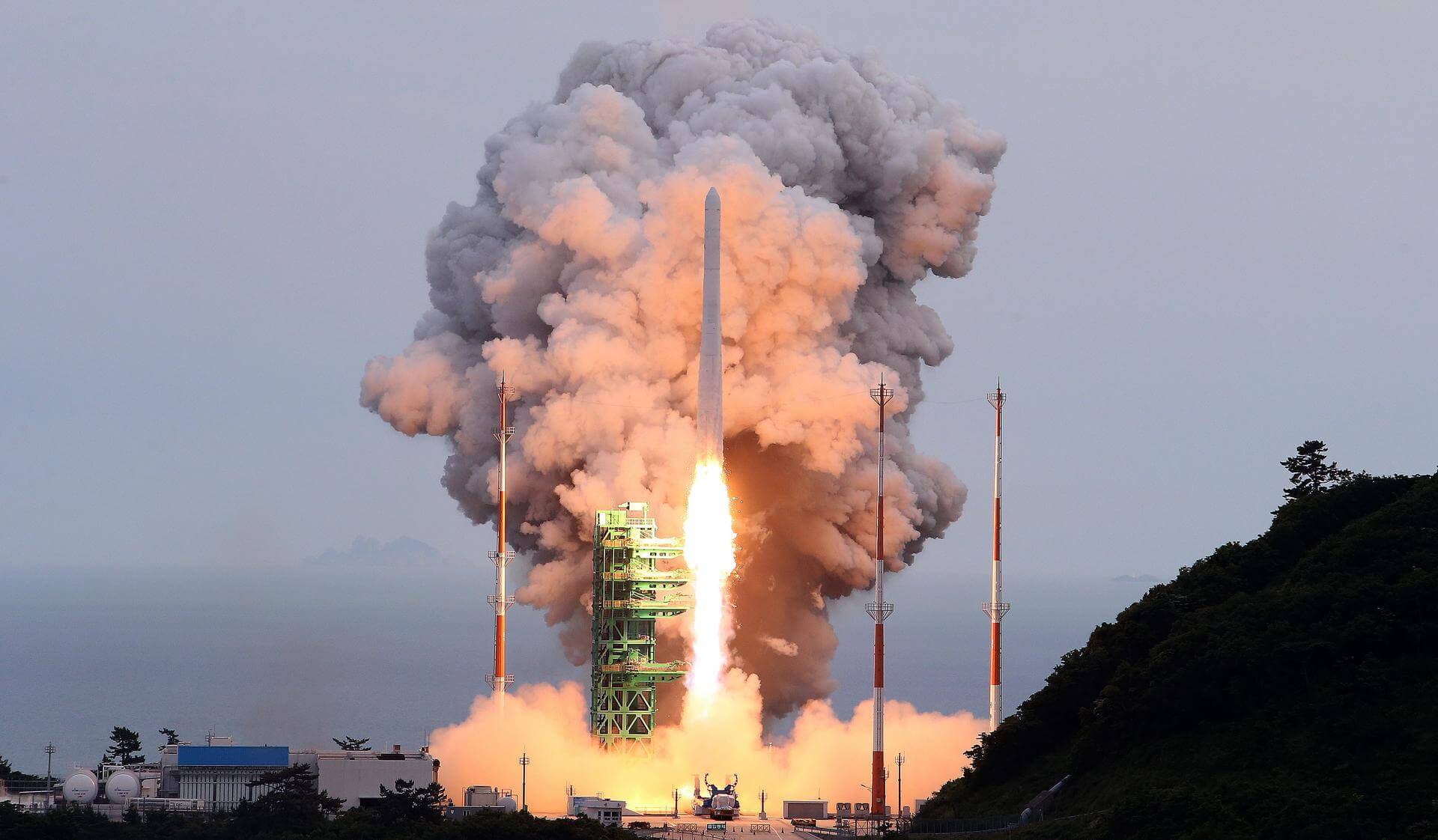
Nuri | NeonSat-2 to 6
NeonSat-2 to 6 are part of the South Korean government's Earth observation micro-satellite constellation NeonSat (New-space Earth Observation Satellite). The NeonSat constellation is the first satellite system developed by the government using a mass-production approach for precise monitoring of the Korean Peninsula.
Nuri | NeonSat-2 to 6
KSLV-2 Nuri • Sun-Synchronous Orbit
"NeonSat-2 to 6 are part of the South Korean government's Earth observation micro-satellite constellation NeonSat (New-space Earth Observation Satellite). The NeonSat constellation is the first satellite system developed by the government using a mass-production approach for precise monitoring of the Korean Peninsula."
Quick answer
Nuri | NeonSat-2 to 6 is an upcoming launch on KSLV-2 Nuri from LC-2, Naro Space Center, South Korea, scheduled for 7 October 2026. Launch dates are indicative and can change.
Nuri | NeonSat-2 to 6: key facts
| Status | Upcoming |
|---|---|
| Scheduled date | 7 October 2026 |
| Launch vehicle | KSLV-2 Nuri |
| Launch site | LC-2, Naro Space Center, South Korea |
| Target orbit | Sun-Synchronous Orbit |
| Organisation | Korea Aerospace Research Institute |
Frequently asked questions
What is Nuri | NeonSat-2 to 6?
NeonSat-2 to 6 are part of the South Korean government's Earth observation micro-satellite constellation NeonSat (New-space Earth Observation Satellite). The Ne...
When is Nuri | NeonSat-2 to 6 scheduled to launch?
Nuri | NeonSat-2 to 6 is listed for 7 October 2026; dates can change.
Which rocket is used for Nuri | NeonSat-2 to 6?
Nuri | NeonSat-2 to 6 uses KSLV-2 Nuri.
Where does Nuri | NeonSat-2 to 6 launch from?
The listed launch site is LC-2, Naro Space Center, South Korea.
What orbit is Nuri | NeonSat-2 to 6 headed for?
The target orbit is listed as Sun-Synchronous Orbit.