 Space Hub
Atomic Clock Revolution: How ISRO Built India’s Navigation Backbone
ISRO’s navigation constellation (IRNSS/NavIC and GAGAN) has used rubidium atomic clocks since its inception. Early NavIC (then IRNSS) satellites carried 3 identical Rb clocks (one active, two hot spares), all procured from Swiss supplier Spectratime. Unfortunately many of these imported Rb clocks failed in orbit. In July 2013, IRNSS‑1A (NAVIC’s first satellite) was launched with three Spectratime Rb clocks; by early 2017 all three had failed. In fact, an analysis showed “6 of 11 satellites” in the constellation eventually suffered clock failures, largely due to the imported Spectratime clocks. For example, IRNSS‑1F (launched Mar 2016) completed its 10‑year design life in March 2026, when its last procured rubidium clock stopped working
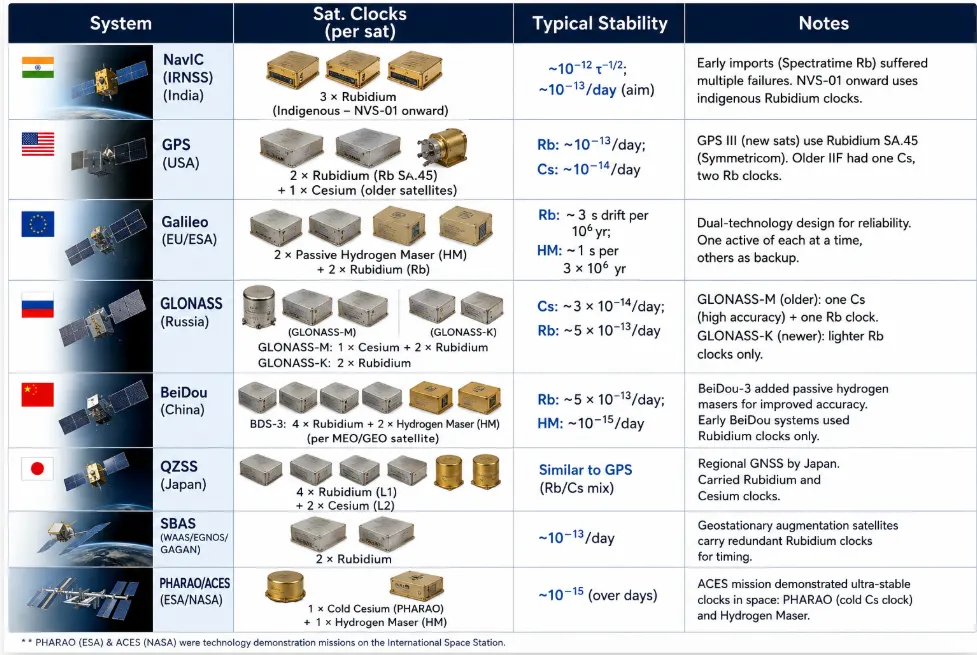
ISRO’s navigation constellation (IRNSS/NavIC and GAGAN) has used rubidium atomic clocks since its inception. Early NavIC (then IRNSS) satellites carried 3 identical Rb clocks (one active, two hot spares), all procured from Swiss supplier Spectratime. Unfortunately many of these imported Rb clocks failed in orbit. In July 2013, IRNSS‑1A (NAVIC’s first satellite) was launched with three Spectratime Rb clocks; by early 2017 all three had failed. In fact, an analysis showed “6 of 11 satellites” in the constellation eventually suffered clock failures, largely due to the imported Spectratime clocks. For example, IRNSS‑1F (launched Mar 2016) completed its 10‑year design life in March 2026, when its last procured rubidium clock stopped working
Verify Source & Full Article
This article is published on Veerexa Space Editorial. Read the live blog post on veerexa.com.